Folklore vs. Film: The Real Gremlin Behind the Hollywood Icon
The image of a gremlin is etched into our collective consciousness, largely thanks to the unforgettable chaos unleashed in Joe Dante's 1984 horror-comedy classic, *Gremlins*. These scaly, mischievous creatures, born from the unsuspecting Mogwai after midnight feedings, have become synonymous with adorable anarchy and small-town terror. Yet, while the film cemented their place in pop culture, the cinematic gremlin is a surprisingly radical departure from its true origins. Long before Gizmo and his destructive offspring graced the silver screen, the concept of a gremlin was already causing headaches and inspiring dark humor among a very different kind of protagonist: the pilots of the Royal Air Force. This article delves into the fascinating history of the gremlin, tracing its journey from a wartime coping mechanism to a beloved Hollywood monster, and exploring how its core essence continues to explain the inexplicable in our technological age.
The Gremlin's True Origins: From RAF Slang to Wartime Myth
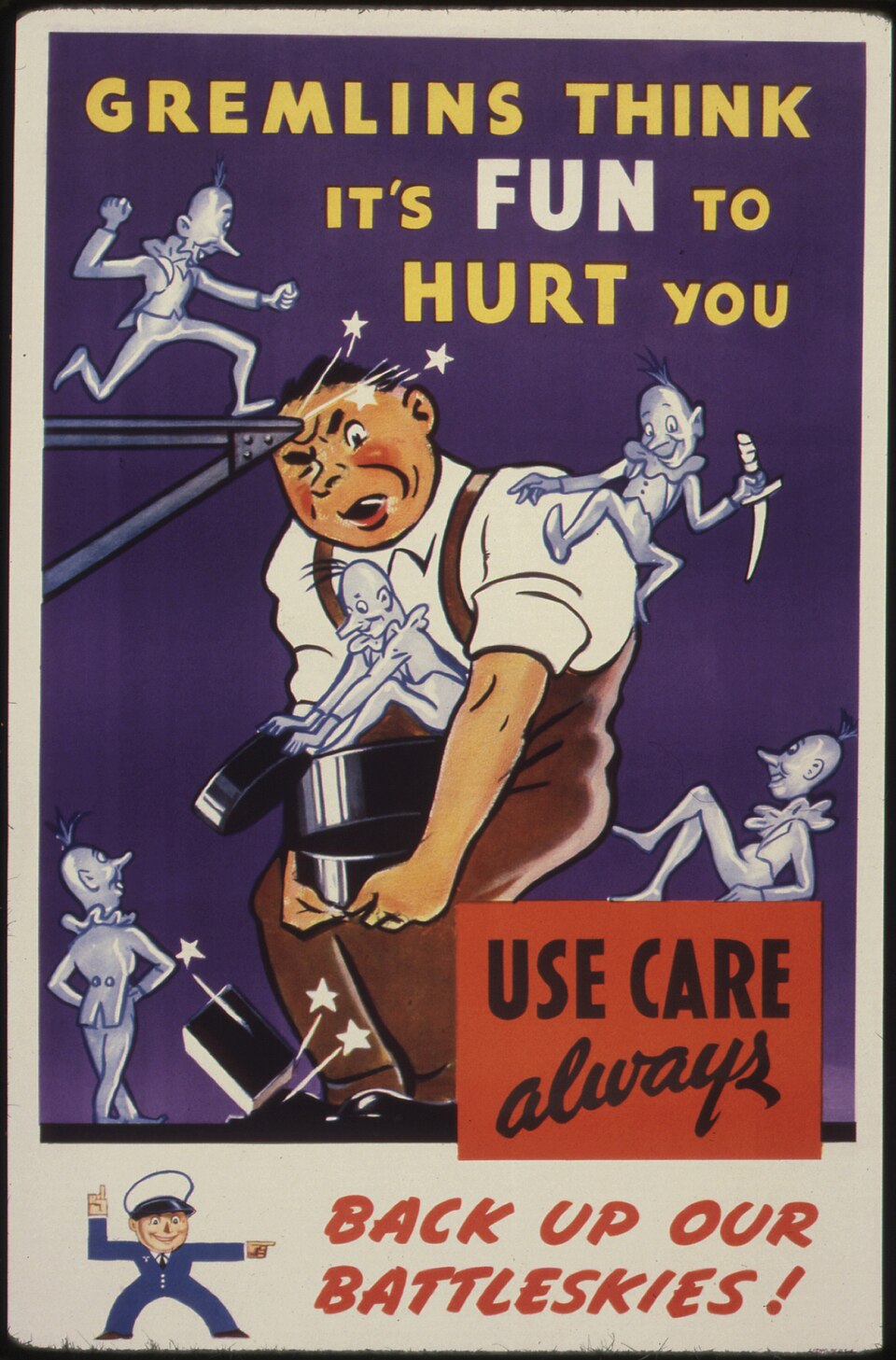
The true genesis of the gremlin isn't found in ancient folklore texts or mystical fables, but rather in the pragmatic and often perilous world of early 20th-century aviation. The term "gremlin" first emerged in the 1920s as slang among British aviators stationed in Malta and the Middle East. Initially, it was a rather mundane piece of jargon, possibly denoting low-ranking, underappreciated personnel or menial workers within the Royal Air Force (RAF). However, as the complexities and inherent dangers of early flight became more apparent, the term began to evolve.
Pilots, contending with unreliable machinery and the stresses of combat, found themselves frequently facing unexplained mechanical failures – an engine sputtering without cause, instruments giving false readings, or controls behaving erratically. Lacking a concrete explanation, these mysterious glitches were attributed to mischievous, unseen entities: the gremlins. These small, impish beings became convenient scapegoats for everything from ammunition jams to inexplicable engine failures. The gremlin myth provided a much-needed psychological outlet, a way for airmen to anthropomorphize the unpredictable perils of aviation and cope with the high-stress realities of flying into the unknown. It was a dark, whimsical humor that helped maintain morale in the face of very real dangers.
During World War II, the gremlin concept exploded in popularity among Allied airmen, spreading across squadrons and continents. Its widespread recognition was further amplified by literary works, most notably Roald Dahl's 1943 children's book, *The Gremlins*. Dahl, himself an RAF pilot, introduced these elf-like figures as both potentially helpful and harmful to aviators, weaving them into a charming narrative that further solidified their image in the public imagination. For a deeper dive into their early history, you can read more about
The Secret History of Gremlins: From RAF Slang to Wartime Myth.
The exact etymology of "gremlin" remains a subject of linguistic debate. While some theories link it to "goblin," suggesting a diminutive form of the mischievous sprite, another intriguing proposal traces it to the Irish Gaelic "gruaimín," meaning "gloomy little person." Regardless of its precise linguistic roots, the functional origin is clear: a term born of necessity and imagination in the challenging environment of early military aviation.
The Cinematic Transformation: Hollywood's Adorable Anarchy
Fast forward four decades, and the gremlin was due for a radical makeover. The 1984 film *Gremlins*, directed by Joe Dante and produced by Steven Spielberg, took the name and concept to entirely new, wildly imaginative heights. The movie introduces the Mogwai, a seemingly innocent, furry creature with three crucial rules: no bright lights, no water, and absolutely no food after midnight. Breaking these rules, as protagonist Billy Peltzer soon discovers, transforms the cute, chirping Mogwai into grotesque, scaly, and malevolent creatures – the gremlins.
The film’s gremlins are pure agents of chaos. They multiply uncontrollably when wet, possess a wicked sense of humor, and delight in destructive mischief, from sabotaging electronics to wreaking havoc on an entire town. This portrayal deviates significantly from the original folklore. The RAF gremlins were unseen or dimly imagined impish beings responsible for *specific mechanical failures* in aircraft. The film's gremlins are physical, multiplying monsters that cause broad societal disruption and fear. Their inspiration, as noted by the filmmakers, came more from the evocative *title* of Roald Dahl's book than a direct adaptation of aviation myths.
The impact of the 1984 film was immense. It spawned sequels, a vast array of merchandise, and countless parodies, firmly embedding the image of these chaotic, multiplying monsters into global pop culture. The film successfully rebranded the gremlin from a niche aviation myth into a mainstream icon, forever associating the name with a particular brand of adorable, yet terrifying, anarchy.
Enduring Metaphor: Gremlins Beyond the Screen and Sky
While Hollywood introduced us to a new kind of gremlin, the original spirit of the myth – the need to explain inexplicable technical woes – has never truly faded. Post-World War II, as technology advanced from propeller planes to complex electronics, computers, and sophisticated machinery, the gremlin evolved alongside it. It became a broader cultural symbol for any unexpected error, glitch, or malfunction in mechanical or electronic systems.
Think about the "bugs" in software code, the "ghosts in the machine" that plague complex systems, or the mysterious printer jam that defies all logical explanation. These are the modern-day manifestations of the gremlin. Engineers, programmers, and even everyday tech users often resort to this figurative language to describe the unpredictable fragility of technology. When a system inexplicably fails, we might still lament, "It must be gremlins!"
This linguistic legacy highlights a fundamental human need: to find a narrative, however fanciful, for phenomena that defy our understanding. In an increasingly complex and interconnected world, where technology often feels autonomous and opaque, the gremlin myth offers a comforting, if humorous, way to externalize our frustrations and anxieties. It's a reminder that even with all our advancements, perfect reliability remains an elusive ideal.
Practical Tip: Acknowledging the "gremlin factor" – the inherent possibility of unforeseen issues – can be a valuable approach in design and troubleshooting. Building in redundancies, conducting thorough testing, and having contingency plans are all ways to mitigate the impact of these elusive "gremlins" in any system, from software development to industrial machinery. This ongoing relevance proves why the myth still explains tech troubles today, as explored in
Gremlins Unpacked: Why This Myth Still Explains Tech Troubles.
Folklore vs. Film: A Comparative Breakdown
To truly appreciate the gremlin's journey, it’s helpful to conduct a direct comparison between its folkloric origins and its cinematic interpretation:
*
Origins:
*
Folklore Gremlin: Born from the slang and coping mechanisms of RAF pilots in the 1920s-1940s.
*
Film Gremlin: Fictional creatures derived from ancient Chinese Mogwai, brought to life in a 1984 Hollywood blockbuster.
*
Appearance:
*
Folklore Gremlin: Small, impish, often unseen or vaguely imagined beings. Their physical description was rarely central to the myth.
*
Film Gremlin: Distinctly grotesque, scaly, reptilian-like monsters that transform from cute, furry Mogwai.
*
Actions & Impact:
*
Folklore Gremlin: Primarily caused specific mechanical malfunctions and technical glitches in aircraft, serving as a scapegoat for the unexplainable dangers of early aviation.
*
Film Gremlin: Engaged in widespread, chaotic destruction, societal disruption, and direct physical menace, multiplying rapidly and terrifying a town.
*
Purpose & Function:
*
Folklore Gremlin: A psychological tool for airmen to cope with stress, explain operational failures, and maintain morale through dark humor.
*
Film Gremlin: Designed for entertainment, delivering horror-comedy, satire, and spectacle.
Despite their vast differences in manifestation, both versions of the gremlin tap into a shared human experience: the frustration and fear of losing control to forces beyond our understanding. Whether it's a mysterious engine failure at 10,000 feet or a horde of green monsters destroying a kitchen, the underlying theme of inexplicable disruption remains.
Conclusion
From the challenging cockpits of wartime aircraft to the charmingly chaotic streets of Kingston Falls, the gremlin has undergone a remarkable transformation. What began as a specific, aviation-centric myth—a whimsical scapegoat for very real mechanical woes among RAF pilots—has evolved into a versatile cultural symbol. While the 1984 film *Gremlins* redefined their visual identity and dramatically broadened their scope of mischief, it simultaneously paid homage to the core essence of the original myth: the unpredictable perils of technology and the persistent human need to find an explanation, even a fanciful one, for the inexplicable. Today, whether we're debugging code or lamenting a temperamental appliance, the spirit of the gremlin endures, a testament to the enduring power of folklore to adapt, evolve, and remain relevant in an ever-changing world.